
Advantages Of Having A Company Website
We live in a world where a product is judged not only by its quality but also by its online presence. Customers check online for anything and everything before making a purchase decision. Whether they are looking for a local restaurant, a new gadget, or professional services, the internet is the first place they turn.
In fact, data revealed by a BrightLocal survey indicates that 87% of consumers read online reviews for local businesses.
Additionally, a study done in 2021 indicated that about 70% of shoppers read between one and six customer reviews online before making a purchasing decision.
Given this shift in consumer behaviour, having an online presence is essential for businesses, whether big or small. A company website serves as a digital store, offering a platform for potential customers to know more about your products or services.
A well-designed website not only helps build credibility and trust but also plays a very important role in lead generation and customer engagement.
This article explores the importance of having a company website, its purpose, and the myriad benefits it offers.
What is a company website?
A company website serves as an online representation of a business. It showcases a company's products, services, values, and other relevant information. A well-developed website serves as a digital storefront, allowing potential customers to interact with the business from anywhere across the globe, round the clock.
A company website can range from a simple informational page to a complex eCommerce site with multiple interactive features.
Whether it is complex or not, the primary goal is to provide visitors with valuable information and an easy way to engage with the business.
A company website typically includes several key elements:
- Home page: This is the prime landing page. A homepage provides an overview of the business and its offerings.
- About us page: this page provides information about the company's history, mission, vision, and team.
- Products/Services: This page gives detailed descriptions of what the business offers, including features, benefits, and pricing.
- Contact information: This section provides easy access to contact details, including phone numbers, email addresses, and physical locations. This is mandatory after the implementation of several data protection laws, such as GDPR.
- Blog/News: This is specifically a section for updates, news, and informative articles. It can help engage visitors and improve SEO.
- Testimonials/Reviews: This page helps build trust and credibility for a brand by adding customer feedback that adds credibility and trust.
How should a company website be?
A company website should be designed with the user experience in mind. It should be:
- User-friendly: Your company website should be easy to navigate and have a well-defined logical structure. Visitors should be able to find information quickly and easily.
- Visually appealing: The design should be attractive and reflect the brand's identity. This includes using consistent colours, fonts, and imagery.
- Mobile-responsive: Mobile internet traffic accounts for almost 60% of total web traffic. Thus, your company website should be optimised for viewing on all devices, such as smartphones and tablets.
- Fast-loading: Page load times should be minimal to keep visitors engaged and reduce bounce rates.
- SEO-optimised: Implementing SEO best practices helps ensure the website ranks on top of the search engine search results. This makes it easier for potential customers to discover the business online.
- Secure: Security is paramount, especially if the website handles sensitive customer information or transactions. Implementing SSL certificates along with other security measures is essential.
- Informative: The content on your company website should be clear and concise and provide value to the target audience. It should address potential customers' questions and needs, guiding them to make informed decisions.
- Interactive: Additional features such as contact forms, live chat, and customer support options enhance user interaction and engagement.
What is the purpose of having a company website?
A company website serves multiple essential functions that are crucial for business success and growth in the digital age. It acts as a versatile platform supporting various aspects of operations, marketing, and customer engagement.
Information dissemination
The primary purpose of a company website is to disseminate information. It acts as a central hub where your visitors can find in-depth information about your products, services, and company history.
By providing comprehensive and easily accessible information, your website ensures potential customers can learn about your offerings at their convenience.
In addition, it also allows for quick updates, keeping your audience informed with the latest news and developments about your business.
Brand building
A company website is instrumental in building and strengthening your brand. It provides a powerful platform to display the identity, values, and unique selling point of your brand.
High-quality content, professional design, and user-friendly navigation contribute to a positive perception of your brand. Additionally, customer testimonials, case studies, and success stories featured on your site can reinforce your brand's credibility and reputation.
Lead generation
Generating leads is another significant purpose of a company website.
By attracting visitors and encouraging specific actions like filling out contact forms, signing up for newsletters, or requesting quotes, your website effectively captures leads.
Tools and techniques such as call-to-action buttons, landing pages, and lead magnets optimise lead generation efforts. This will eventually turn your company website into a powerful tool to drive conversions.
Sales channel
A company website also serves as a direct sales channel, especially for businesses offering products or services online. eCommerce functionality allows customers to browse, select, and purchase products directly from your site. This will, in turn, significantly enhance your customer experience, thereby expanding your market reach.
Even for businesses not selling online, a website supports the sales process by providing detailed product information, customer reviews, and comparison tools.
Do I need a company website?
Yes, having a company website is essential. It ensures your business is accessible online 24/7, enhances credibility, and provides a platform for online marketing to increase visibility.
A website enables customer engagement through blogs, contact forms, and social media links, and serves as a hub for sharing important information.
Additionally, it offers a competitive edge and eCommerce opportunities, helping you reach a global market and boost sales. Overall, a website is a valuable asset for growth and success.
Advantages of having a company website
The significance of having a company website cannot be overstated. Here are the detailed advantages of having a company website:
Increased visibility
A company website dramatically increases your business's visibility. In today's digital age, consumers primarily use search engines to find products and services.
By targeting relevant keywords and consistently producing valuable content, your website can attract organic traffic, expanding your reach among a broader section of the audience without the need for paid advertising.
Credibility and professionalism
First impressions matter a lot when it comes to business.
A well-designed website serves as the first point of contact between your business and potential customers. A professional, aesthetically pleasing website conveys credibility and builds trust. Customers are more likely to trust a business that has a strong online presence.
Customer engagement and support
A website facilitates customer engagement by providing various means for customers to interact with your business.
Features like live chat, contact forms, and FAQ sections allow for immediate communication and support. Additionally, offering valuable resources such as blog posts, guides, and video tutorials enhances the customer experience and helps address common questions and concerns.
Sales and revenue
Integrating eCommerce capabilities into your website allows you to sell products and services directly online, increasing sales and revenue.
Your website can serve as a round-the-clock sales channel, providing customers with the convenience of shopping at any time. Lead generation tools, such as contact forms, landing pages, and newsletters, help capture visitor information and nurture these leads into paying customers.
By converting website visitors into sales, your business can grow dramatically without the need for a physical storefront.
Competitive advantage
A company website gives you a competitive edge by establishing a strong market presence and allowing you to stay ahead of industry trends.
By updating your website continuously with new content, features, and design improvements, you can adapt to changing consumer preferences and market conditions.
This agility helps you maintain relevance and competitiveness in a rapidly evolving digital landscape. Moreover, a well-maintained website allows you to monitor competitors and industry trends, enabling you to make informed strategic decisions.
How to create a company website?
Building a company website is a comprehensive endeavour that involves strategic planning, creative design, and technical development. Here's a detailed guide on how to create a company website descriptively:
Define your goal
The first step in creating a company website is to define its primary purpose clearly. You can start by asking yourself what you aim to achieve with the site.
This could be anything ranging from increasing brand awareness and generating leads to enabling e-commerce and providing customer support. Identify your target audience and think about the key messages you want to communicate to them.
Having a clear set of goals will guide the design, content, and functionality decisions throughout the development process.
Choose a domain name
Selecting a domain name is very important as it represents your business's address on the internet.
The domain name should be short, memorable, and easy to spell. It should also be relevant to your business or industry to ensure that it is easily recognisable.
While a .com extension is often preferred, other extensions like .net or .org can also be suitable depending on your business needs.
Partner with a web development company
For a professional and high-quality website, consider partnering with a reputable web development company.
They can provide custom website design and development services tailored to your business needs. Additionally, they can help implement advanced features and functionalities, ensuring that your site is both scalable and secure for future growth.
For more detailed guidance on choosing the right web developer, you can refer to our article on essential factors to consider when selecting a web development partner.
Read: Choosing The Right Web Developer: Essential Factors To Consider
Select a hosting provider
It is important to choose a reliable hosting provider to ensure that your website remains online all the time to users across the globe. When choosing a hosting provider, it is crucial to consider factors such as:
- Speed and performance capabilities,
- Reliability and uptime guarantees,
- Quality of customer support, pricing plans, etc.
In addition a good hosting provider will also offer scalability options to accommodate your website's growth over time.
Design and develop
Your website starts to take shape during the design and development phase.
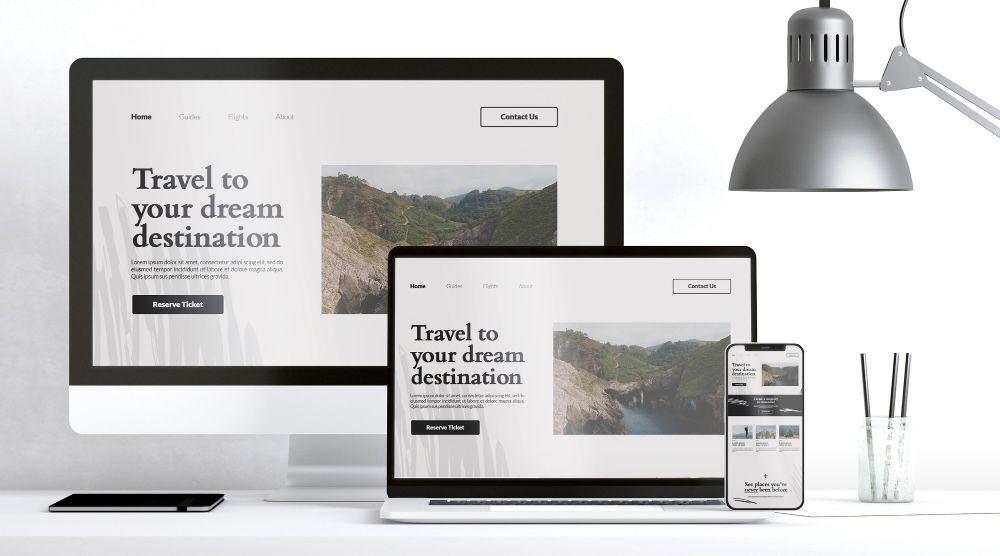
It's important to focus on creating a responsive design that looks equally good on all devices, including desktops, tablets, and smartphones.
Additionally, the navigation should be user-friendly, allowing visitors to find information quickly and easily. The visual aesthetics of the website should align with your brand identity, presenting a clean and professional image.
Content is another critical aspect of your website. Ensure that your site clearly communicates your business offerings, contact details, and other essential information.
The content should be designed to meet the needs and interests of your target audience. Utilise marketing banners to highlight special promotions, new products, or important announcements to engage visitors and drive conversions.
Optimise for SEO
SEO is vital for enhancing your website's visibility on search engines like Google. Effective SEO practices include:
- Integrating relevant keywords into your content.
- Creating high-quality and original content.
- Ensuring your site is mobile-friendly.
- Optimising page load speeds.
- Building backlinks from reputable sources.
These strategies will help improve your site's search engine ranking and attract more organic traffic.
Launch and promote
Once your website is fully developed and optimised, it's time to launch and promote it. Start by thoroughly testing the site to ensure that all features, links, forms, and payment gateways are functioning correctly. After testing, make your website live to the public.
Implement digital marketing strategies such as leveraging social media platforms, email marketing campaigns, and using PPC(pay-per-click) advertising to reach a wider audience.
Conclusion
In today's online-driven world, a company website is vital for businesses of any size. It enhances visibility, credibility, and customer engagement while providing a cost-effective marketing platform and a robust sales channel.
Thus, by establishing a strong online presence, your company can reach a broader audience, build lasting relationships with customers, and stay competitive.
Remember, investing in a professional website unlocks numerous growth opportunities for the future.
Ready to elevate your business? Consult us at Techies for expert web development services designed to drive growth and success!

Digitizing businesses since 2017


© 2026 Techies | All rights reserved